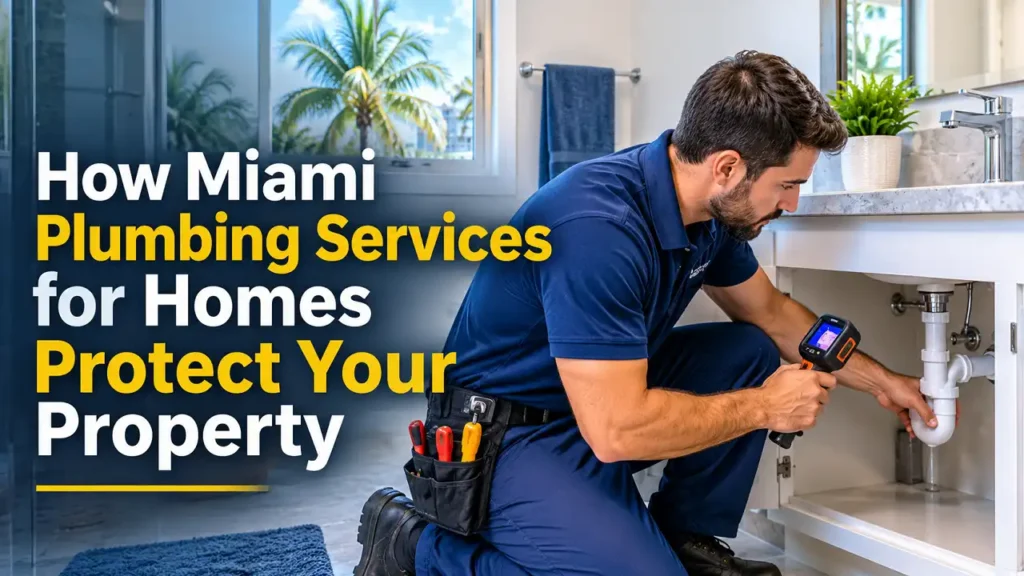
A slow drip behind your shower wall can quietly rot a subfloor in one Miami summer. Water damage rarely announces itself. It spreads through drywall, tile grout, and concrete slabs until you notice the musty smell or a buckled baseboard. Miami’s humidity, salt air, and mineral-heavy water speed up that damage faster than in most U.S. cities. The right miami plumbing services for homes stop small leaks before they become mold remediation bills, insurance claims, or full bathroom tear-outs. This article covers what those services include, what they cost in 2026, and how to choose a plumber you can trust.
Important Highlights
- Miami’s climate shortens fixture life. Toilet internals, shower cartridges, and supply lines often wear out 20% to 30% sooner here than national averages because of humidity and mineral buildup.
- Licensing is verifiable in under two minutes. Every Florida plumbing contractor should hold a state certification (license prefix CFC) that you can check on the Florida DBPR license lookup before work starts.
- WaterSense fixtures pay for themselves. Swapping a 3.5 GPF toilet for a 1.28 GPF model saves a typical Miami family thousands of gallons per year and lowers your water and sewer bill.
Why Miami Homes Need Specialized Plumbing Care
Miami homes face plumbing stress that inland homes never see. Our Local Gov Certified plumbers frequently see this in local bathroom setups: corroded shut-off valves, calcified aerators, and cast iron drains cracked from decades of use. Much of Miami-Dade’s housing stock was built between the 1950s and 1980s. That means many homes still run on original pipes that have outlived their design life.
Water Line Repair: Protect Your Miami Home Today
On recent service calls across Miami, we traced most emergency leaks back to four local causes.
| Miami Environmental Factor | Effect on Bathroom Plumbing | What We Recommend |
|---|---|---|
| High humidity (70%+ much of the year) | Condensation on cold pipes, mold behind walls, rusted fittings | Exhaust fans vented outdoors, pipe insulation on cold lines |
| Mineral-rich water from the Biscayne Aquifer | Scale on showerheads, aerators, and toilet fill valves | Annual descaling, whole-home filter or softener |
| Salt air in coastal zones | Faster corrosion of exposed brass, copper, and chrome | Corrosion-resistant fittings, regular valve exercise |
| High water table and flood events | Sewer backups, slab movement, drain line stress | Backwater valves, camera inspections after major storms |
| Aging housing stock (pre-1980) | Cast iron drain failure, galvanized supply lines, polybutylene pipe | Camera inspection and repipe planning |
If you’ve spent a summer in Miami, FL, this humidity control strategy makes complete sense. Moisture that sits in a bathroom for hours feeds mold, loosens tile adhesive, and corrodes metal fixtures. Start by checking that your bathroom fan actually vents to the outside, not into the attic.
Core Bathroom Plumbing Services Miami Homeowners Need
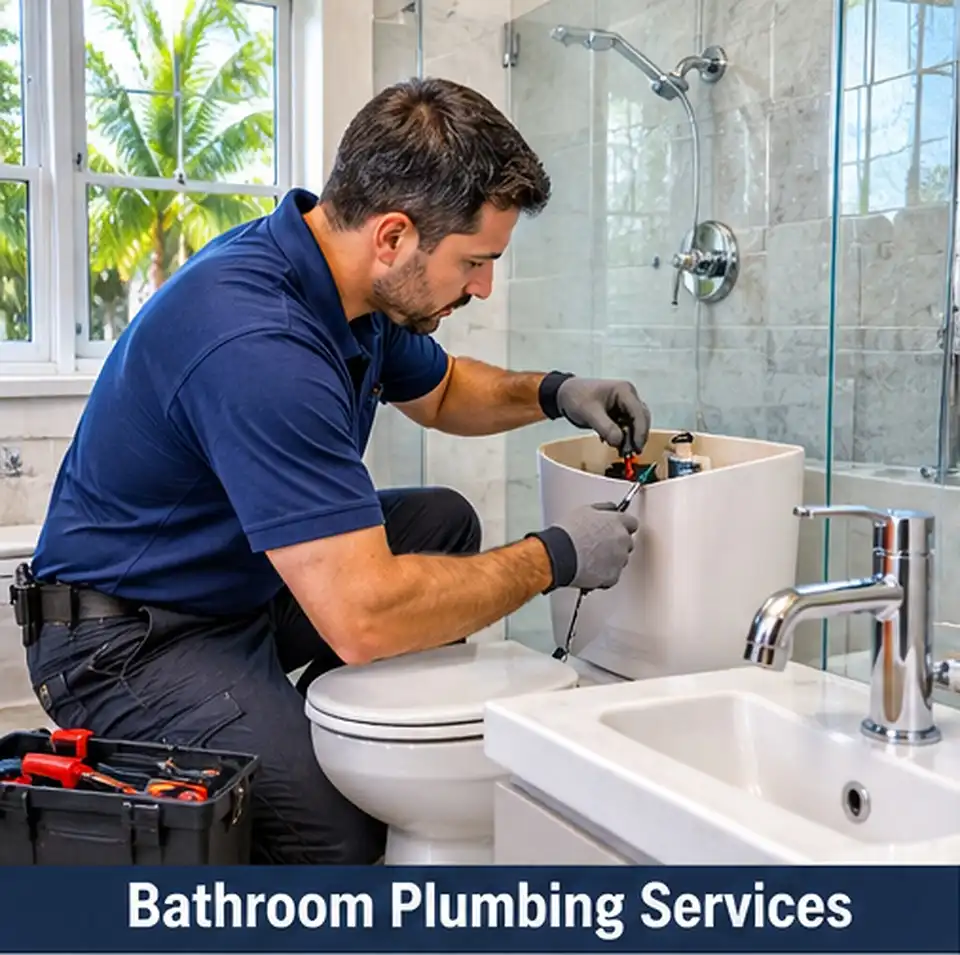
Bathroom plumbing covers five main service categories. Each one targets a different failure point, and many Miami homes need more than one at the same time. Good miami plumbing services for homes combine diagnosis, repair, and prevention in a single visit. You can review our full list of bathroom plumbing services to see how each one fits your home.
Toilet Repairs
Toilet repairs fix leaks, weak flushes, and constant running. A running toilet can waste 200 gallons per day, which shows up fast on your Miami-Dade water bill. In Miami, hard water scale clogs fill valves and degrades rubber flappers in as little as three to five years.
Common toilet problems we fix:
- Phantom flushing (tank refills on its own) from a worn flapper
- Constant running from a failed fill valve
- Rocking toilet from a broken flange or failed wax ring
- Weak flush from mineral-clogged rim jets
- Water at the base, which signals a seal failure that can rot your subfloor
Shower and Tub Installations
Shower and tub installations replace outdated, leaking, or unsafe bathing areas. We install walk-in showers, curbless shower pans, tub-to-shower conversions, and pressure-balancing valves. Every install includes a waterproof membrane test before tile goes on. This step prevents the hidden pan leaks we find in so many Miami remodels.
What a proper install includes:
- Inspect the subfloor and existing drain for rot or cracks.
- Install a code-compliant shower pan with correct slope (1/4 inch per foot).
- Flood test the pan for 24 hours before tile work.
- Set a thermostatic or pressure-balancing valve to prevent scalding.
- Pressure test all new supply connections.
Leak Detection
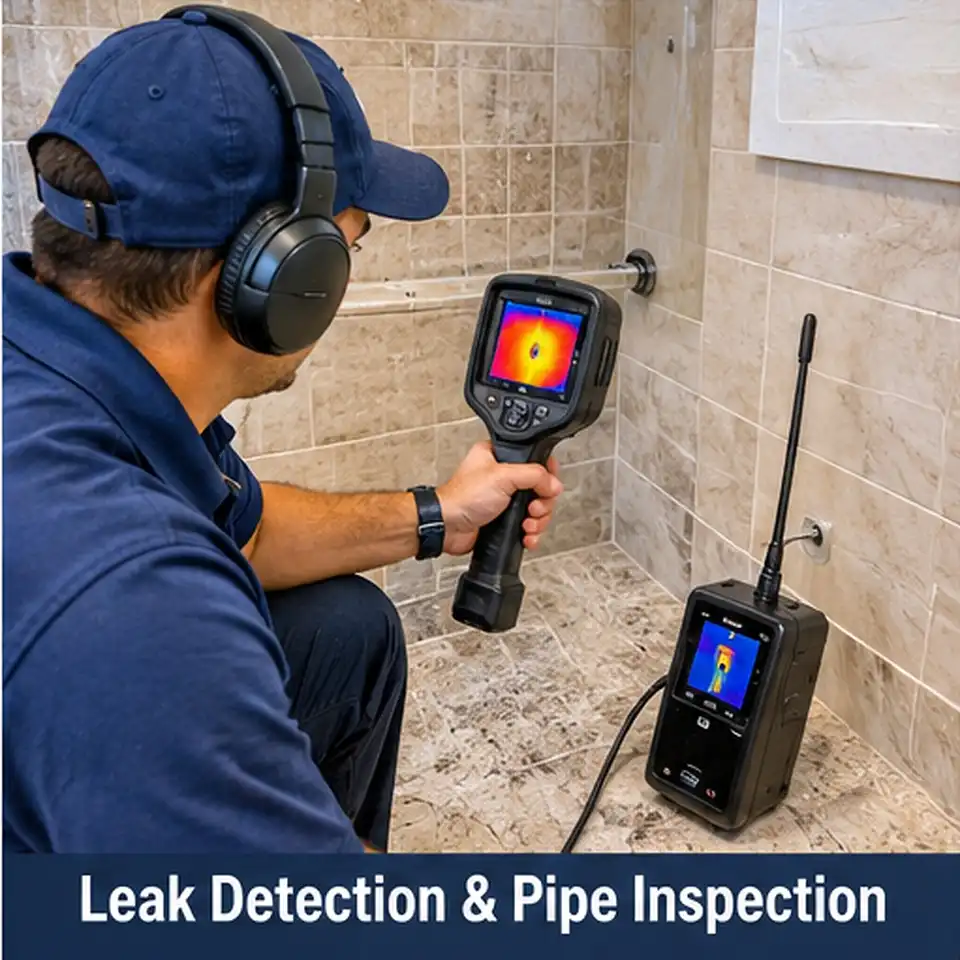
Leak detection finds water loss you cannot see. We use acoustic listening equipment, thermal imaging cameras, and pressure testing to locate leaks without tearing out walls. Slab leaks (leaks in pipes under your concrete foundation) are common in Miami because most homes sit on slab foundations.
Warning signs of a hidden leak:
- Your water bill jumps with no change in usage
- The water meter dial moves when every fixture is off
- Warm spots on tile floors (a hot water slab leak)
- Musty odors or mold along baseboards
- Cracks in tile or grout that keep coming back
Drain Cleaning
Drain cleaning clears clogs and restores full flow. Bathroom drains collect hair, soap scum, and mineral scale, which bind together into stubborn blockages. We use motorized augers for sink and tub lines and hydro jetting (high-pressure water cleaning) for main lines.
| Method | Best For | Pros | Cons |
|---|---|---|---|
| Plunger | Minor toilet or sink clogs | Free, fast | Fails on deep clogs |
| Hand auger (snake) | Tub and sink hair clogs | Low cost, safe for pipes | Limited reach |
| Motorized auger | Branch line blockages | Breaks up tough clogs | Leaves residue on pipe walls |
| Hydro jetting | Main line scale, grease, roots | Scours pipe walls clean | Not for fragile, cracked cast iron |
| Chemical drain cleaners | Not recommended | Cheap | Damages pipes, harms septic systems |
Pipe Maintenance and Repiping
Pipe maintenance keeps your supply and drain lines working safely. Many Miami homes still have galvanized steel, polybutylene, or original cast iron. Each material has a known failure pattern.
| Pipe Material | Common in Miami Homes Built | Typical Lifespan | Miami Risk Level |
|---|---|---|---|
| Galvanized steel | Before 1960 | 40 to 60 years | High: internal rust, low pressure |
| Cast iron (drains) | Before 1975 | 50 to 75 years (often less here) | High: cracking, scale, root intrusion |
| Polybutylene | 1978 to 1995 | Unpredictable | Very high: sudden bursts, insurance issues |
| Copper | 1960s to present | 50+ years | Moderate: pinhole leaks from water chemistry |
| CPVC | 1980s to present | 50 to 75 years | Low to moderate: brittle with age and heat |
| PEX | 2000s to present | 40 to 50 years | Low: flexible, scale-resistant |
Ask your plumber for a camera inspection of your drain line if your home was built before 1975.
Miami Plumbing Services for Homes Cost: 2026 Price Breakdown
Plumbing costs in Miami depend on access, materials, and permit requirements. Prices below reflect typical 2026 ranges for Miami-Dade bathroom work. Emergency calls, after-hours visits, and slab access raise the final price. Always ask for a written, itemized quote before work begins.
| Service | Typical Miami Cost Range | Time on Site |
|---|---|---|
| Diagnostic or service call | $75 to $200 | 30 to 60 minutes |
| Toilet repair (flapper, fill valve) | $150 to $350 | 1 hour |
| Wax ring and flange reseal | $150 to $350 | 1 to 2 hours |
| Toilet replacement (installed) | $350 to $900 | 2 to 3 hours |
| Sink or tub drain clearing | $150 to $400 | 1 to 2 hours |
| Main line hydro jetting | $350 to $800 | 2 to 4 hours |
| Video camera inspection | $200 to $500 | 1 to 2 hours |
| Electronic leak detection | $250 to $600 | 1 to 3 hours |
| Slab leak repair or reroute | $1,500 to $4,500 | 1 to 3 days |
| Shower valve replacement | $300 to $900 | 2 to 4 hours |
| Tub or shower installation | $1,500 to $6,000+ | 2 to 5 days |
| Whole-home PEX repipe | $4,500 to $12,000 | 2 to 5 days |
| Cast iron drain replacement or lining | $3,000 to $15,000+ | 2 to 7 days |
What Drives Your Final Price
- Access: Pipes under a slab or behind tile cost more to reach.
- Permits: Miami-Dade requires permits for repiping, water heater swaps, and fixture relocations.
- Materials: Brand-name valves and WaterSense fixtures cost more up front but save money over time.
- Timing: Nights, weekends, and storm-season emergencies carry premium rates.
- Hidden damage: Rotted subfloors or cracked drains found during work add to the scope.
At Miami Bathroom Plumbing Services, we quote flat-rate pricing before we pick up a wrench. Request a line-item quote so you can compare plumbers on equal terms.
Fixture Lifespan in Miami Homes
Fixtures wear out faster in Miami than national averages suggest. Mineral scale, humidity, and heavy year-round use shorten the life of moving parts. We track these patterns on every service call.
| Fixture or Component | National Average Lifespan | Typical Miami Lifespan | Early Warning Sign |
|---|---|---|---|
| Toilet bowl and tank (porcelain) | 25+ years | 25+ years | Hairline cracks |
| Toilet flapper and fill valve | 5 to 7 years | 3 to 5 years | Running or hissing |
| Bathroom faucet | 15 to 20 years | 10 to 15 years | Drips, stiff handles |
| Showerhead | 8 to 10 years | 5 to 8 years | Uneven spray, clogged nozzles |
| Shower valve cartridge | 10 to 15 years | 7 to 10 years | Temperature swings |
| Supply lines (braided) | 5 to 8 years | 5 years | Bulging, rust at fittings |
| Tank water heater | 8 to 12 years | 8 to 10 years | Rusty water, popping sounds |
| Tankless water heater | 15 to 20 years | 12 to 18 years | Error codes, flow drops |
Braided supply lines are the cheapest insurance in your bathroom. Replace them every five years, even if they look fine.

Repair vs. Replace: Making the Right Call
Repair makes sense when the core fixture is sound. Replacement makes sense when repair costs approach half the price of a new unit or when parts are obsolete. We use the 50% rule as a starting point on every job.
| Situation | Repair | Replace |
|---|---|---|
| Toilet under 15 years, running water | ✔ New flapper and fill valve | |
| Toilet older than 1994 (3.5+ GPF) | ✔ Upgrade to 1.28 GPF WaterSense | |
| Cracked porcelain tank or bowl | ✔ Cracks spread and leak | |
| Single dripping faucet cartridge | ✔ Cartridge swap | |
| Faucet with corroded body | ✔ New faucet | |
| Shower temperature swings | ✔ Cartridge or valve rebuild | ✔ If valve is pre-2000 |
| One pinhole leak in copper | ✔ Spot repair | |
| Three or more leaks in one year | ✔ Repipe section or whole home | |
| Polybutylene supply lines | ✔ Full replacement |
Pros and Cons of Repairing
Pros:
- Lower upfront cost
- Faster turnaround, often same day
- Keeps matching fixtures and finishes
Cons:
- Older fixtures keep wasting water
- Repeat failures add up
- Obsolete parts can be hard to source
Pros and Cons of Replacing
Pros:
- Lower monthly water bills
- New warranty coverage
- Fewer emergency calls
Cons:
- Higher initial investment
- May require a permit
- Possible tile or drywall work
Ask your plumber to show you the old part and explain why it failed before you decide.
Water Usage Standards: GPM and GPF
Water efficiency standards set the maximum flow for every bathroom fixture. GPF means gallons per flush. GPM means gallons per minute. The EPA WaterSense program certifies fixtures that use at least 20% less water than federal limits without sacrificing performance.
| Fixture | Pre-1994 Typical Use | Current Federal Maximum | WaterSense Maximum |
|---|---|---|---|
| Toilet | 3.5 to 7 GPF | 1.6 GPF | 1.28 GPF |
| Showerhead | 4 to 5 GPM | 2.5 GPM | 2.0 GPM |
| Bathroom faucet | 3 to 4 GPM | 2.2 GPM | 1.5 GPM |

What the Savings Look Like
| Upgrade | Estimated Annual Water Saved (Family of Four) |
|---|---|
| 3.5 GPF toilet to 1.28 GPF | 13,000+ gallons |
| 2.5 GPM showerhead to 1.8 GPM | 2,500+ gallons |
| 2.2 GPM faucet to 1.5 GPM | 700+ gallons |
Miami-Dade bills water and sewer together, so every gallon saved cuts both charges. The Miami-Dade Water and Sewer Department posts conservation programs and any available fixture rebates. Check for current rebate offers before you buy a new toilet or showerhead.
Troubleshooting Common Bathroom Problems Before You Call
Simple checks can tell you whether you have a quick fix or a real emergency. These steps take minutes and help us diagnose faster when we arrive. For a deeper look at warning signs, read our guide to common bathroom plumbing problems.

Running Toilet
- Remove the tank lid and look at the flapper.
- Add five drops of food coloring to the tank.
- Wait 15 minutes without flushing.
- Check the bowl. Colored water means the flapper leaks.
- Adjust the float if water flows into the overflow tube.
Slow Shower or Tub Drain
- Remove the drain stopper or cover.
- Pull visible hair with a plastic drain tool.
- Flush with hot (not boiling) water.
- Call a plumber if multiple drains slow at once. That points to a main line issue.
Suspected Hidden Leak
- Turn off every faucet, toilet, and appliance.
- Read your water meter and note the number.
- Wait two hours with no water use.
- Read the meter again. Any change confirms a leak.
Low Water Pressure in the Bathroom
- Unscrew the faucet aerator or showerhead.
- Soak it in white vinegar for one hour to dissolve scale.
- Reinstall and test the flow.
- Check other rooms. House-wide low pressure suggests a supply line or regulator issue.
Shut off the main valve immediately if you see active water spreading across the floor.
Bathroom Plumbing Maintenance Checklist for Miami Homes
Routine maintenance prevents most emergency calls. Miami’s climate makes a seasonal schedule more important than in drier regions. Hurricane season adds a second layer of preparation that many homeowners skip.
Monthly
- Run water in guest bathrooms to keep drain traps full and block sewer gas
- Check under sinks for drips, stains, or warped cabinet floors
- Listen for toilets that refill between flushes
Every Three Months
- Clean showerheads and faucet aerators with vinegar
- Test shut-off valves under sinks and toilets by turning them
- Inspect caulk around tubs and showers for gaps or mold
Every Year
- Flush your water heater to remove sediment
- Replace toilet flappers if they feel stiff or warped
- Schedule a professional inspection of supply lines and valves
Before Hurricane Season (June 1)
- Locate and tag your main water shut-off
- Confirm your backwater valve works if your home has one
- Store drinking water and know how to drain your water heater safely
- Book a camera inspection if your drains backed up during last year’s storms
Set a recurring phone reminder for the first day of each quarter so these tasks never slip.
How to Find Miami Plumbing Services for Homes Near Me
A trusted local plumber is licensed, insured, and familiar with Miami-Dade codes. Proximity matters too. A plumber based nearby reaches you faster during a burst pipe or sewer backup.
Follow these steps to vet any plumber:
- Verify the state license on the Florida DBPR online license lookup.
- Request proof of general liability and workers’ compensation insurance.
- Confirm they pull permits for regulated work.
- Ask about written warranties on parts and labor.
- Compare at least two itemized quotes.
- Check that they service your specific neighborhood.
| Credential | Why It Matters | How to Verify |
|---|---|---|
| Florida Certified Plumbing Contractor (CFC) | Legal to work statewide | Florida DBPR license search |
| General liability insurance | Covers damage to your home | Request a certificate of insurance |
| Workers’ compensation | Protects you if a worker is injured | Florida Division of Workers’ Compensation lookup |
| Permit history | Shows code-compliant work | Miami-Dade or city building department records |
| Written warranty | Protects your investment | Get it on the invoice |
Reading Miami Plumbing Services for Homes Reviews
Reviews reveal patterns that a website cannot. Focus on recent reviews, detailed descriptions, and how the company responds to criticism.
Green flags:
- Reviews mention specific plumbers by name
- Customers describe on-time arrival and clear pricing
- The company replies to negative reviews with solutions
Red flags:
- Dozens of five-star reviews posted in the same week
- Repeated mentions of surprise fees
- No responses to complaints
Read the three-star reviews first. They usually give the most balanced picture.
Saving the Right Miami Plumbing Services for Homes Phone Number
Search results often show call-tracking numbers and lead-generation sites that sell your request to the highest bidder. Save the direct number of a verified local plumber before an emergency happens. Confirm the business name matches the license on file when you call.
Resolving Miami Plumbing Services for Homes Complaints
Most plumbing complaints come from unclear pricing, unfinished work, or repeat failures. A clear process resolves most disputes quickly.
Steps to resolve a plumbing complaint:
- Document the problem with dated photos and videos.
- Contact the company in writing and reference your invoice and warranty.
- Allow a reasonable window for a return visit to correct the work.
- Escalate to Miami-Dade County Consumer Protection if the issue stays unresolved.
- File a complaint with the Florida DBPR for licensing or workmanship violations.
- Consult your homeowner’s insurance if water damage resulted from faulty work.
| Complaint Type | Prevention Step |
|---|---|
| Surprise charges | Get a written, flat-rate quote first |
| Repeat leaks | Require a parts and labor warranty |
| No-show appointments | Choose a plumber with confirmed arrival windows |
| Unpermitted work | Ask for the permit number before work starts |
At Miami Bathroom Plumbing Services, we put warranty terms on every invoice so you know exactly what is covered.
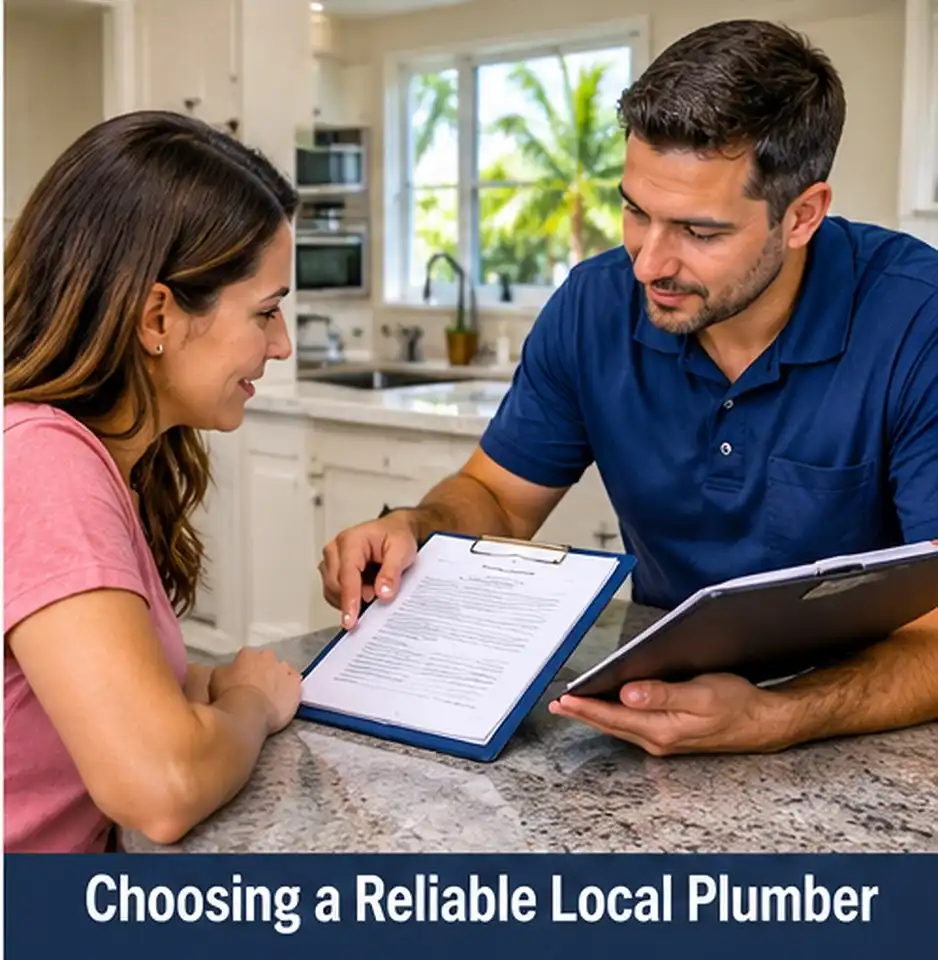
What Sets the Best Miami Plumbing Services for Homes Apart
The best plumbers combine licensing, local knowledge, and transparent communication. Price alone does not predict quality. The cheapest quote often becomes the most expensive job once callbacks start.
| Factor | Average Plumber | Top-Tier Local Plumber |
|---|---|---|
| Pricing | Hourly, open-ended | Flat-rate, written upfront |
| Diagnosis | Visual guess | Camera, thermal, and acoustic tools |
| Permits | Sometimes skipped | Always pulled when required |
| Warranty | Verbal or none | Written on parts and labor |
| Local knowledge | Generic approach | Knows Miami pipe eras and water chemistry |
| Cleanup | Basic | Floor protection and full cleanup |
Ask any plumber which diagnostic tools they bring to your home before you book.
Service Area Coverage Across Miami-Dade
Plumbing needs vary by neighborhood. Coastal areas fight salt corrosion, while older inland neighborhoods deal with aging cast iron. Our crews know these differences street by street. See the full list of Miami-Dade neighborhoods we cover.
| Area | Common Housing Era | Most Frequent Bathroom Issues |
|---|---|---|
| Coral Gables | 1920s to 1960s | Galvanized supply lines, cast iron drains |
| Miami Beach | 1930s to 1970s | Salt air corrosion, condo riser leaks |
| Kendall | 1970s to 1990s | Polybutylene pipe, slab leaks |
| Hialeah | 1950s to 1980s | Cast iron drain failure, low pressure |
| Coconut Grove | Mixed historic and new | Root intrusion, older fixtures |
| Doral | 1990s to present | Water heater issues, CPVC aging |
| Homestead | 1990s to present | Hard water scale, post-storm repairs |
| North Miami | 1950s to 1970s | Cast iron, galvanized pipe replacement |
Call to confirm same-day availability in your neighborhood.
Why Miami Homeowners Trust Our Team
Reliable miami plumbing services for homes come down to honest pricing and work done right the first time. Our Local Gov Certified plumbers live and work in Miami. We understand local codes, local water, and local weather. Every job includes upfront pricing, clean work areas, and plain-language explanations.
Learn more about the Miami Bathroom Plumbing Services team and schedule your bathroom inspection today.
What You Should Know
How often should a Miami home have a plumbing inspection?
Schedule a professional inspection once a year. Homes built before 1980 benefit from a camera inspection of the main drain every two to three years. Add an extra check after any major hurricane or flood event.
Do I need a permit to replace a toilet or shower valve in Miami-Dade?
A like-for-like toilet swap usually does not require a permit. Relocating fixtures, repiping, or replacing a water heater does. A licensed plumber handles the permit process for you.
Is polybutylene pipe still a problem in Miami homes?
Yes. Many Kendall and South Dade homes built between 1978 and 1995 still have it. Polybutylene can fail without warning, and some insurers refuse coverage or raise premiums when it is present.
Why does my Miami shower lose pressure over time?
Mineral scale builds up inside showerheads and valve cartridges. Soaking the showerhead in vinegar restores flow in most cases. If pressure stays low, the valve cartridge or supply line likely needs service.
How can I tell a slab leak from a regular bathroom leak?
Slab leaks cause warm spots on floors, sounds of running water with all fixtures off, and a moving water meter. Regular leaks usually show visible water under sinks or around toilets. Electronic leak detection confirms the exact location without breaking concrete.
Does homeowner’s insurance cover plumbing leaks in Florida?
Most policies cover sudden water damage but exclude slow leaks and wear. Many Florida policies also cap water damage payouts. Review your policy and document routine maintenance to support any future claim.
How much water does a WaterSense toilet really save in Miami?
Replacing a 3.5 GPF toilet with a 1.28 GPF model saves a family of four about 13,000 gallons per year. Because Miami-Dade bills water and sewer together, the savings show up on both charges.
What should I do first during a bathroom plumbing emergency?
Shut off the fixture valve or the main water valve immediately. Turn off power to any wet electrical outlets. Then call a licensed plumber and photograph the damage for insurance.